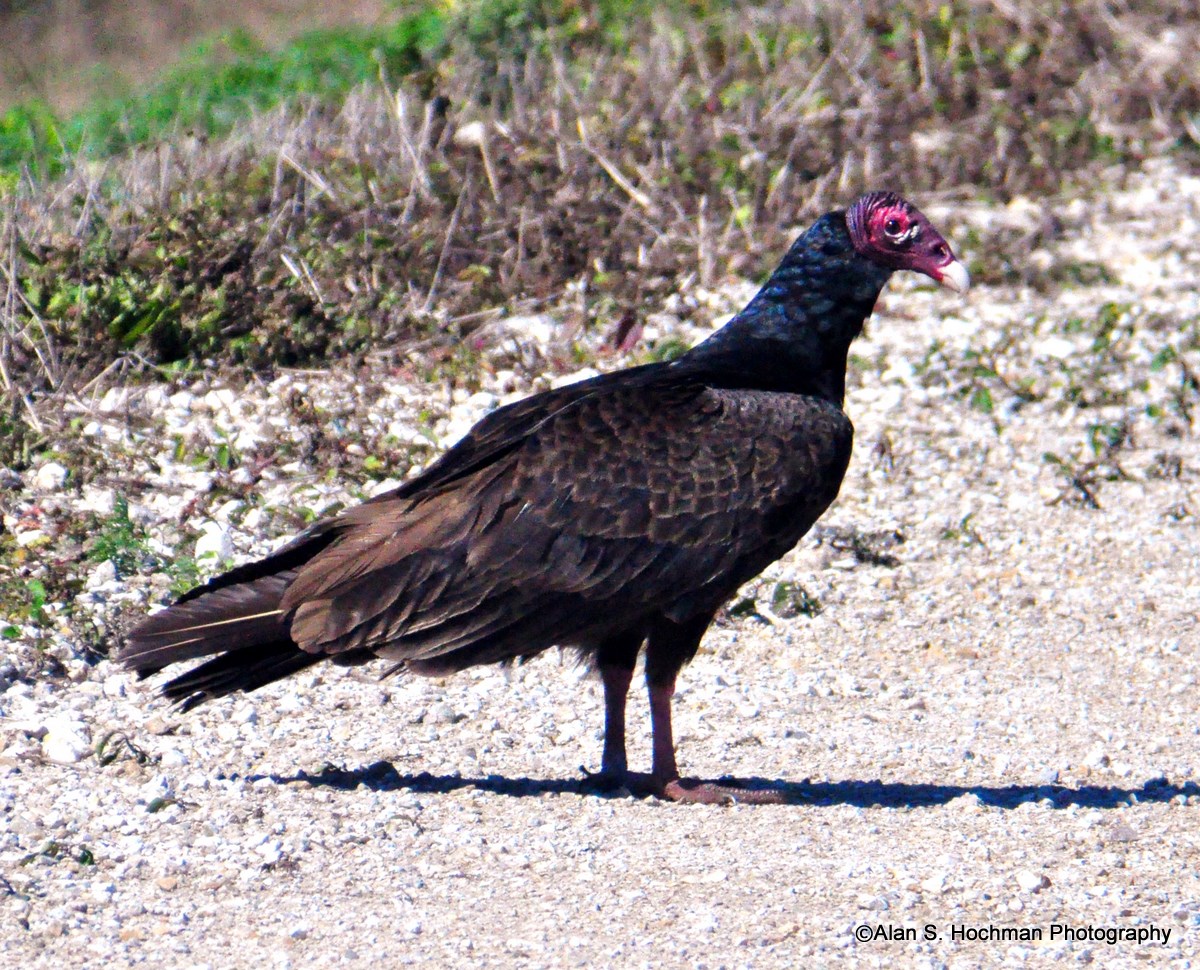
Turkey Vulture at Holey Land WMA
ALL PHOTOS, Birds, HOLEYLAND — June 6, 2010 at 8:51 pm | 3 comments |
- other sizes:
- 800 x 600
- 1280 x 1024
- original size
TurkeyA turkey is a large birdBirds (class Aves) are feathered, winged, bipedal, endothermic (warm-blooded), egg-laying, vertebrate animals. Around 10,000 living species makes them the most speciose class of tetrapod vertebrates. They inhabit ecosystems across the globe, from the Arctic to the Antarctic. Extant birds range in size from the 5 cm (2 in) BeeBees are flying insects closely related to wasps and ants, and are known for their role in pollination and for producing honey and beeswax. Bees are a monophyletic lineage within the superfamily Apoidea, presently classified by the unranked taxon name Anthophila. There are nearly 20,000 known species of bees in seven to nine recognized families,[1] though many are undescribed and the actual number is probably higher. They are found on every continent except Antarctica, in every habitat on the planet that contains insect-pollinated flowering plants. Bees are adapted for feeding on nectar and pollen, the former primarily as an energy source and the latter primarily for protein and other nutrients. Most pollen is used as food for larvae. Bees have a long proboscis (a complex "tongue") that enables them to obtain the nectar from flowers. They have antennae almost universally made up of 13 segments in males and 12 in females, as is typical for the superfamily. Bees all have two pairs of wings, the hind pair being the smaller of the two; in a very few species, one sex or caste has relatively short wings that make flight difficult or impossible, but none are wingless. Hummingbird to the 2.75 m (9 ft) Ostrich. The fossil record indicates birds evolved from theropod dinosaurs during the Jurassic period, around 150–200 million years (Ma) ago, and the earliest known bird is the Late Jurassic Archaeopteryx, around 150–145 Mya (million years ago). Most paleontologists regard birds as the only clade of dinosaurs to have survived the Cretaceous–Tertiary extinction event approximately 65.5 Mya. Modern birds are characterised by feathers, a beak with no teeth, the laying of hard-shelled eggs, a high metabolic rate, a four-chambered heart, and a lightweight but strong skeleton. All living species of birds have wings—the now extinct flightless Moa of New Zealand was the only exception. Wings are evolved forelimbs, and most bird species can flyTrue flies are insects of the order Diptera (di = two, and ptera = wings). They possess a pair of wings on the mesothorax and a pair of halteres, derived from the hind wings, on the metathorax. The presence of a single pair of wings distinguishes true flies from other insects with "fly" in their name, such as mayflies, dragonflies, damselflies, stoneflies, whiteflies, fireflies, alderflies, dobsonflies, snakeflies, sawflies, caddisflies, butterflies or scorpionflies. Some true flies have become secondarily wingless, especially in the superfamily Hippoboscoidea, or among those that are inquilines in social insect colonies. Diptera is a large order, containing an estimated 240,000 species of mosquitoes, gnats, midges and others, although under half of these (about 120,000 species) have been described. It is one of the major insect orders both in terms of ecological and human (medical and economic) importance. The Diptera, in particular the mosquitoes (Culicidae), are of great importance as disease transmitters, acting as vectors for malaria, dengue, West Nile virus, yellow fever, encephalitis and other infectious diseases., with some exceptions, including ratites, penguins, and a number of diverse endemic island species. Birds also have unique digestive and respiratory systems that are highly adapted for flight. Some birds, especially corvids and parrots, are among the most intelligent animal species; a number of bird species have been observed manufacturing and using tools, and many social species exhibit cultural transmission of knowledge across generations. in the genus Meleagris. One species, Meleagris gallopavo, commonly known as the Wild Turkey, is native to the forests of North America. The domestic turkey is a descendant of this species. The other living species is Meleagris ocellata or the Ocellated Turkey, native to the forests of the Yucatán Peninsula. There are several extinct species dating from as far back as 23 million years ago. Turkeys are classed in the taxonomic order of Galliformes. Within this order they are relatives of the grouse family or subfamily. Males of both species have a distinctive fleshy wattle or protuberance that hangs from the top of the beak—called a snood in the Wild Turkey and its domestic descendants. They are among the largest birds in their ranges. As in many galliform species, the male (tom or gobbler) is larger and much more colorful than the female (hen). VultureVulture is the name given to two groups of convergently evolved scavenging birds, the New World Vultures including the well-known Californian and Andean Condors, and the Old World Vultures including the birds which are seen scavenging on carcasses of dead animals on African plains. New World Vultures are found in North and South America, Old World Vultures in Europe, Africa and Asia, meaning that between the two groups, Vultures are found on every continent except Australia and Antarctica. photographed in the Holey Land Wildlife Management Area off of Deem City, Florida. The camera used in this photo is a Nikon D90 with a Tamron 28-300mm telephoto lens.
TurkeyA turkey is a large birdBirds (class Aves) are feathered, winged, bipedal, endothermic (warm-blooded), egg-laying, vertebrate animals. Around 10,000 living species makes them the most speciose class of tetrapod vertebrates. They inhabit ecosystems across the globe, from the Arctic to the Antarctic. Extant birds range in size from the 5 cm (2 in) BeeBees are flying insects closely related to wasps and ants, and are known for their role in pollination and for producing honey and beeswax. Bees are a monophyletic lineage within the superfamily Apoidea, presently classified by the unranked taxon name Anthophila. There are nearly 20,000 known species of bees in seven to nine recognized families,[1] though many are undescribed and the actual number is probably higher. They are found on every continent except Antarctica, in every habitat on the planet that contains insect-pollinated flowering plants. Bees are adapted for feeding on nectar and pollen, the former primarily as an energy source and the latter primarily for protein and other nutrients. Most pollen is used as food for larvae. Bees have a long proboscis (a complex "tongue") that enables them to obtain the nectar from flowers. They have antennae almost universally made up of 13 segments in males and 12 in females, as is typical for the superfamily. Bees all have two pairs of wings, the hind pair being the smaller of the two; in a very few species, one sex or caste has relatively short wings that make flight difficult or impossible, but none are wingless. Hummingbird to the 2.75 m (9 ft) Ostrich. The fossil record indicates birds evolved from theropod dinosaurs during the Jurassic period, around 150–200 million years (Ma) ago, and the earliest known bird is the Late Jurassic Archaeopteryx, around 150–145 Mya (million years ago). Most paleontologists regard birds as the only clade of dinosaurs to have survived the Cretaceous–Tertiary extinction event approximately 65.5 Mya. Modern birds are characterised by feathers, a beak with no teeth, the laying of hard-shelled eggs, a high metabolic rate, a four-chambered heart, and a lightweight but strong skeleton. All living species of birds have wings—the now extinct flightless Moa of New Zealand was the only exception. Wings are evolved forelimbs, and most bird species can flyTrue flies are insects of the order Diptera (di = two, and ptera = wings). They possess a pair of wings on the mesothorax and a pair of halteres, derived from the hind wings, on the metathorax. The presence of a single pair of wings distinguishes true flies from other insects with "fly" in their name, such as mayflies, dragonflies, damselflies, stoneflies, whiteflies, fireflies, alderflies, dobsonflies, snakeflies, sawflies, caddisflies, butterflies or scorpionflies. Some true flies have become secondarily wingless, especially in the superfamily Hippoboscoidea, or among those that are inquilines in social insect colonies. Diptera is a large order, containing an estimated 240,000 species of mosquitoes, gnats, midges and others, although under half of these (about 120,000 species) have been described. It is one of the major insect orders both in terms of ecological and human (medical and economic) importance. The Diptera, in particular the mosquitoes (Culicidae), are of great importance as disease transmitters, acting as vectors for malaria, dengue, West Nile virus, yellow fever, encephalitis and other infectious diseases., with some exceptions, including ratites, penguins, and a number of diverse endemic island species. Birds also have unique digestive and respiratory systems that are highly adapted for flight. Some birds, especially corvids and parrots, are among the most intelligent animal species; a number of bird species have been observed manufacturing and using tools, and many social species exhibit cultural transmission of knowledge across generations. in the genus Meleagris. One species, Meleagris gallopavo, commonly known as the Wild Turkey, is native to the forests of North America. The domestic turkey is a descendant of this species. The other living species is Meleagris ocellata or the Ocellated Turkey, native to the forests of the Yucatán Peninsula. There are several extinct species dating from as far back as 23 million years ago. Turkeys are classed in the taxonomic order of Galliformes. Within this order they are relatives of the grouse family or subfamily. Males of both species have a distinctive fleshy wattle or protuberance that hangs from the top of the beak—called a snood in the Wild Turkey and its domestic descendants. They are among the largest birds in their ranges. As in many galliform species, the male (tom or gobbler) is larger and much more colorful than the female (hen). VultureVulture is the name given to two groups of convergently evolved scavenging birds, the New World Vultures including the well-known Californian and Andean Condors, and the Old World Vultures including the birds which are seen scavenging on carcasses of dead animals on African plains. New World Vultures are found in North and South America, Old World Vultures in Europe, Africa and Asia, meaning that between the two groups, Vultures are found on every continent except Australia and Antarctica. Trivia:
The TurkeyA turkey is a large birdBirds (class Aves) are feathered, winged, bipedal, endothermic (warm-blooded), egg-laying, vertebrate animals. Around 10,000 living species makes them the most speciose class of tetrapod vertebrates. They inhabit ecosystems across the globe, from the Arctic to the Antarctic. Extant birds range in size from the 5 cm (2 in) BeeBees are flying insects closely related to wasps and ants, and are known for their role in pollination and for producing honey and beeswax. Bees are a monophyletic lineage within the superfamily Apoidea, presently classified by the unranked taxon name Anthophila. There are nearly 20,000 known species of bees in seven to nine recognized families,[1] though many are undescribed and the actual number is probably higher. They are found on every continent except Antarctica, in every habitat on the planet that contains insect-pollinated flowering plants. Bees are adapted for feeding on nectar and pollen, the former primarily as an energy source and the latter primarily for protein and other nutrients. Most pollen is used as food for larvae. Bees have a long proboscis (a complex "tongue") that enables them to obtain the nectar from flowers. They have antennae almost universally made up of 13 segments in males and 12 in females, as is typical for the superfamily. Bees all have two pairs of wings, the hind pair being the smaller of the two; in a very few species, one sex or caste has relatively short wings that make flight difficult or impossible, but none are wingless. Hummingbird to the 2.75 m (9 ft) Ostrich. The fossil record indicates birds evolved from theropod dinosaurs during the Jurassic period, around 150–200 million years (Ma) ago, and the earliest known bird is the Late Jurassic Archaeopteryx, around 150–145 Mya (million years ago). Most paleontologists regard birds as the only clade of dinosaurs to have survived the Cretaceous–Tertiary extinction event approximately 65.5 Mya. Modern birds are characterised by feathers, a beak with no teeth, the laying of hard-shelled eggs, a high metabolic rate, a four-chambered heart, and a lightweight but strong skeleton. All living species of birds have wings—the now extinct flightless Moa of New Zealand was the only exception. Wings are evolved forelimbs, and most bird species can flyTrue flies are insects of the order Diptera (di = two, and ptera = wings). They possess a pair of wings on the mesothorax and a pair of halteres, derived from the hind wings, on the metathorax. The presence of a single pair of wings distinguishes true flies from other insects with "fly" in their name, such as mayflies, dragonflies, damselflies, stoneflies, whiteflies, fireflies, alderflies, dobsonflies, snakeflies, sawflies, caddisflies, butterflies or scorpionflies. Some true flies have become secondarily wingless, especially in the superfamily Hippoboscoidea, or among those that are inquilines in social insect colonies. Diptera is a large order, containing an estimated 240,000 species of mosquitoes, gnats, midges and others, although under half of these (about 120,000 species) have been described. It is one of the major insect orders both in terms of ecological and human (medical and economic) importance. The Diptera, in particular the mosquitoes (Culicidae), are of great importance as disease transmitters, acting as vectors for malaria, dengue, West Nile virus, yellow fever, encephalitis and other infectious diseases., with some exceptions, including ratites, penguins, and a number of diverse endemic island species. Birds also have unique digestive and respiratory systems that are highly adapted for flight. Some birds, especially corvids and parrots, are among the most intelligent animal species; a number of bird species have been observed manufacturing and using tools, and many social species exhibit cultural transmission of knowledge across generations. in the genus Meleagris. One species, Meleagris gallopavo, commonly known as the Wild Turkey, is native to the forests of North America. The domestic turkey is a descendant of this species. The other living species is Meleagris ocellata or the Ocellated Turkey, native to the forests of the Yucatán Peninsula. There are several extinct species dating from as far back as 23 million years ago. Turkeys are classed in the taxonomic order of Galliformes. Within this order they are relatives of the grouse family or subfamily. Males of both species have a distinctive fleshy wattle or protuberance that hangs from the top of the beak—called a snood in the Wild Turkey and its domestic descendants. They are among the largest birds in their ranges. As in many galliform species, the male (tom or gobbler) is larger and much more colorful than the female (hen). VultureVulture is the name given to two groups of convergently evolved scavenging birds, the New World Vultures including the well-known Californian and Andean Condors, and the Old World Vultures including the birds which are seen scavenging on carcasses of dead animals on African plains. New World Vultures are found in North and South America, Old World Vultures in Europe, Africa and Asia, meaning that between the two groups, Vultures are found on every continent except Australia and Antarctica., Cathartes aura, is a birdBirds (class Aves) are feathered, winged, bipedal, endothermic (warm-blooded), egg-laying, vertebrate animals. Around 10,000 living species makes them the most speciose class of tetrapod vertebrates. They inhabit ecosystems across the globe, from the Arctic to the Antarctic. Extant birds range in size from the 5 cm (2 in) BeeBees are flying insects closely related to wasps and ants, and are known for their role in pollination and for producing honey and beeswax. Bees are a monophyletic lineage within the superfamily Apoidea, presently classified by the unranked taxon name Anthophila. There are nearly 20,000 known species of bees in seven to nine recognized families,[1] though many are undescribed and the actual number is probably higher. They are found on every continent except Antarctica, in every habitat on the planet that contains insect-pollinated flowering plants. Bees are adapted for feeding on nectar and pollen, the former primarily as an energy source and the latter primarily for protein and other nutrients. Most pollen is used as food for larvae. Bees have a long proboscis (a complex "tongue") that enables them to obtain the nectar from flowers. They have antennae almost universally made up of 13 segments in males and 12 in females, as is typical for the superfamily. Bees all have two pairs of wings, the hind pair being the smaller of the two; in a very few species, one sex or caste has relatively short wings that make flight difficult or impossible, but none are wingless. Hummingbird to the 2.75 m (9 ft) Ostrich. The fossil record indicates birds evolved from theropod dinosaurs during the Jurassic period, around 150–200 million years (Ma) ago, and the earliest known bird is the Late Jurassic Archaeopteryx, around 150–145 Mya (million years ago). Most paleontologists regard birds as the only clade of dinosaurs to have survived the Cretaceous–Tertiary extinction event approximately 65.5 Mya. Modern birds are characterised by feathers, a beak with no teeth, the laying of hard-shelled eggs, a high metabolic rate, a four-chambered heart, and a lightweight but strong skeleton. All living species of birds have wings—the now extinct flightless Moa of New Zealand was the only exception. Wings are evolved forelimbs, and most bird species can flyTrue flies are insects of the order Diptera (di = two, and ptera = wings). They possess a pair of wings on the mesothorax and a pair of halteres, derived from the hind wings, on the metathorax. The presence of a single pair of wings distinguishes true flies from other insects with "fly" in their name, such as mayflies, dragonflies, damselflies, stoneflies, whiteflies, fireflies, alderflies, dobsonflies, snakeflies, sawflies, caddisflies, butterflies or scorpionflies. Some true flies have become secondarily wingless, especially in the superfamily Hippoboscoidea, or among those that are inquilines in social insect colonies. Diptera is a large order, containing an estimated 240,000 species of mosquitoes, gnats, midges and others, although under half of these (about 120,000 species) have been described. It is one of the major insect orders both in terms of ecological and human (medical and economic) importance. The Diptera, in particular the mosquitoes (Culicidae), are of great importance as disease transmitters, acting as vectors for malaria, dengue, West Nile virus, yellow fever, encephalitis and other infectious diseases., with some exceptions, including ratites, penguins, and a number of diverse endemic island species. Birds also have unique digestive and respiratory systems that are highly adapted for flight. Some birds, especially corvids and parrots, are among the most intelligent animal species; a number of bird species have been observed manufacturing and using tools, and many social species exhibit cultural transmission of knowledge across generations. found throughout most of the Americas. It also known in some North American regions as the TurkeyA turkey is a large birdBirds (class Aves) are feathered, winged, bipedal, endothermic (warm-blooded), egg-laying, vertebrate animals. Around 10,000 living species makes them the most speciose class of tetrapod vertebrates. They inhabit ecosystems across the globe, from the Arctic to the Antarctic. Extant birds range in size from the 5 cm (2 in) BeeBees are flying insects closely related to wasps and ants, and are known for their role in pollination and for producing honey and beeswax. Bees are a monophyletic lineage within the superfamily Apoidea, presently classified by the unranked taxon name Anthophila. There are nearly 20,000 known species of bees in seven to nine recognized families,[1] though many are undescribed and the actual number is probably higher. They are found on every continent except Antarctica, in every habitat on the planet that contains insect-pollinated flowering plants. Bees are adapted for feeding on nectar and pollen, the former primarily as an energy source and the latter primarily for protein and other nutrients. Most pollen is used as food for larvae. Bees have a long proboscis (a complex "tongue") that enables them to obtain the nectar from flowers. They have antennae almost universally made up of 13 segments in males and 12 in females, as is typical for the superfamily. Bees all have two pairs of wings, the hind pair being the smaller of the two; in a very few species, one sex or caste has relatively short wings that make flight difficult or impossible, but none are wingless. Hummingbird to the 2.75 m (9 ft) Ostrich. The fossil record indicates birds evolved from theropod dinosaurs during the Jurassic period, around 150–200 million years (Ma) ago, and the earliest known bird is the Late Jurassic Archaeopteryx, around 150–145 Mya (million years ago). Most paleontologists regard birds as the only clade of dinosaurs to have survived the Cretaceous–Tertiary extinction event approximately 65.5 Mya. Modern birds are characterised by feathers, a beak with no teeth, the laying of hard-shelled eggs, a high metabolic rate, a four-chambered heart, and a lightweight but strong skeleton. All living species of birds have wings—the now extinct flightless Moa of New Zealand was the only exception. Wings are evolved forelimbs, and most bird species can flyTrue flies are insects of the order Diptera (di = two, and ptera = wings). They possess a pair of wings on the mesothorax and a pair of halteres, derived from the hind wings, on the metathorax. The presence of a single pair of wings distinguishes true flies from other insects with "fly" in their name, such as mayflies, dragonflies, damselflies, stoneflies, whiteflies, fireflies, alderflies, dobsonflies, snakeflies, sawflies, caddisflies, butterflies or scorpionflies. Some true flies have become secondarily wingless, especially in the superfamily Hippoboscoidea, or among those that are inquilines in social insect colonies. Diptera is a large order, containing an estimated 240,000 species of mosquitoes, gnats, midges and others, although under half of these (about 120,000 species) have been described. It is one of the major insect orders both in terms of ecological and human (medical and economic) importance. The Diptera, in particular the mosquitoes (Culicidae), are of great importance as disease transmitters, acting as vectors for malaria, dengue, West Nile virus, yellow fever, encephalitis and other infectious diseases., with some exceptions, including ratites, penguins, and a number of diverse endemic island species. Birds also have unique digestive and respiratory systems that are highly adapted for flight. Some birds, especially corvids and parrots, are among the most intelligent animal species; a number of bird species have been observed manufacturing and using tools, and many social species exhibit cultural transmission of knowledge across generations. in the genus Meleagris. One species, Meleagris gallopavo, commonly known as the Wild Turkey, is native to the forests of North America. The domestic turkey is a descendant of this species. The other living species is Meleagris ocellata or the Ocellated Turkey, native to the forests of the Yucatán Peninsula. There are several extinct species dating from as far back as 23 million years ago. Turkeys are classed in the taxonomic order of Galliformes. Within this order they are relatives of the grouse family or subfamily. Males of both species have a distinctive fleshy wattle or protuberance that hangs from the top of the beak—called a snood in the Wild Turkey and its domestic descendants. They are among the largest birds in their ranges. As in many galliform species, the male (tom or gobbler) is larger and much more colorful than the female (hen). Buzzard (or just “buzzard”), and in some areas of the Caribbean as the John Crow or Carrion Crow. One of three species in the genus Cathartes, in the family Cathartidae, the TurkeyA turkey is a large birdBirds (class Aves) are feathered, winged, bipedal, endothermic (warm-blooded), egg-laying, vertebrate animals. Around 10,000 living species makes them the most speciose class of tetrapod vertebrates. They inhabit ecosystems across the globe, from the Arctic to the Antarctic. Extant birds range in size from the 5 cm (2 in) BeeBees are flying insects closely related to wasps and ants, and are known for their role in pollination and for producing honey and beeswax. Bees are a monophyletic lineage within the superfamily Apoidea, presently classified by the unranked taxon name Anthophila. There are nearly 20,000 known species of bees in seven to nine recognized families,[1] though many are undescribed and the actual number is probably higher. They are found on every continent except Antarctica, in every habitat on the planet that contains insect-pollinated flowering plants. Bees are adapted for feeding on nectar and pollen, the former primarily as an energy source and the latter primarily for protein and other nutrients. Most pollen is used as food for larvae. Bees have a long proboscis (a complex "tongue") that enables them to obtain the nectar from flowers. They have antennae almost universally made up of 13 segments in males and 12 in females, as is typical for the superfamily. Bees all have two pairs of wings, the hind pair being the smaller of the two; in a very few species, one sex or caste has relatively short wings that make flight difficult or impossible, but none are wingless. Hummingbird to the 2.75 m (9 ft) Ostrich. The fossil record indicates birds evolved from theropod dinosaurs during the Jurassic period, around 150–200 million years (Ma) ago, and the earliest known bird is the Late Jurassic Archaeopteryx, around 150–145 Mya (million years ago). Most paleontologists regard birds as the only clade of dinosaurs to have survived the Cretaceous–Tertiary extinction event approximately 65.5 Mya. Modern birds are characterised by feathers, a beak with no teeth, the laying of hard-shelled eggs, a high metabolic rate, a four-chambered heart, and a lightweight but strong skeleton. All living species of birds have wings—the now extinct flightless Moa of New Zealand was the only exception. Wings are evolved forelimbs, and most bird species can flyTrue flies are insects of the order Diptera (di = two, and ptera = wings). They possess a pair of wings on the mesothorax and a pair of halteres, derived from the hind wings, on the metathorax. The presence of a single pair of wings distinguishes true flies from other insects with "fly" in their name, such as mayflies, dragonflies, damselflies, stoneflies, whiteflies, fireflies, alderflies, dobsonflies, snakeflies, sawflies, caddisflies, butterflies or scorpionflies. Some true flies have become secondarily wingless, especially in the superfamily Hippoboscoidea, or among those that are inquilines in social insect colonies. Diptera is a large order, containing an estimated 240,000 species of mosquitoes, gnats, midges and others, although under half of these (about 120,000 species) have been described. It is one of the major insect orders both in terms of ecological and human (medical and economic) importance. The Diptera, in particular the mosquitoes (Culicidae), are of great importance as disease transmitters, acting as vectors for malaria, dengue, West Nile virus, yellow fever, encephalitis and other infectious diseases., with some exceptions, including ratites, penguins, and a number of diverse endemic island species. Birds also have unique digestive and respiratory systems that are highly adapted for flight. Some birds, especially corvids and parrots, are among the most intelligent animal species; a number of bird species have been observed manufacturing and using tools, and many social species exhibit cultural transmission of knowledge across generations. in the genus Meleagris. One species, Meleagris gallopavo, commonly known as the Wild Turkey, is native to the forests of North America. The domestic turkey is a descendant of this species. The other living species is Meleagris ocellata or the Ocellated Turkey, native to the forests of the Yucatán Peninsula. There are several extinct species dating from as far back as 23 million years ago. Turkeys are classed in the taxonomic order of Galliformes. Within this order they are relatives of the grouse family or subfamily. Males of both species have a distinctive fleshy wattle or protuberance that hangs from the top of the beak—called a snood in the Wild Turkey and its domestic descendants. They are among the largest birds in their ranges. As in many galliform species, the male (tom or gobbler) is larger and much more colorful than the female (hen). VultureVulture is the name given to two groups of convergently evolved scavenging birds, the New World Vultures including the well-known Californian and Andean Condors, and the Old World Vultures including the birds which are seen scavenging on carcasses of dead animals on African plains. New World Vultures are found in North and South America, Old World Vultures in Europe, Africa and Asia, meaning that between the two groups, Vultures are found on every continent except Australia and Antarctica. is the most widespread of the New World vultures, ranging from southern Canada to the southernmost tip of South America. It inhabits a variety of open and semi-open areas, including subtropical forests, shrublands, pastures, and deserts. A large birdBirds (class Aves) are feathered, winged, bipedal, endothermic (warm-blooded), egg-laying, vertebrate animals. Around 10,000 living species makes them the most speciose class of tetrapod vertebrates. They inhabit ecosystems across the globe, from the Arctic to the Antarctic. Extant birds range in size from the 5 cm (2 in) BeeBees are flying insects closely related to wasps and ants, and are known for their role in pollination and for producing honey and beeswax. Bees are a monophyletic lineage within the superfamily Apoidea, presently classified by the unranked taxon name Anthophila. There are nearly 20,000 known species of bees in seven to nine recognized families,[1] though many are undescribed and the actual number is probably higher. They are found on every continent except Antarctica, in every habitat on the planet that contains insect-pollinated flowering plants. Bees are adapted for feeding on nectar and pollen, the former primarily as an energy source and the latter primarily for protein and other nutrients. Most pollen is used as food for larvae. Bees have a long proboscis (a complex "tongue") that enables them to obtain the nectar from flowers. They have antennae almost universally made up of 13 segments in males and 12 in females, as is typical for the superfamily. Bees all have two pairs of wings, the hind pair being the smaller of the two; in a very few species, one sex or caste has relatively short wings that make flight difficult or impossible, but none are wingless. Hummingbird to the 2.75 m (9 ft) Ostrich. The fossil record indicates birds evolved from theropod dinosaurs during the Jurassic period, around 150–200 million years (Ma) ago, and the earliest known bird is the Late Jurassic Archaeopteryx, around 150–145 Mya (million years ago). Most paleontologists regard birds as the only clade of dinosaurs to have survived the Cretaceous–Tertiary extinction event approximately 65.5 Mya. Modern birds are characterised by feathers, a beak with no teeth, the laying of hard-shelled eggs, a high metabolic rate, a four-chambered heart, and a lightweight but strong skeleton. All living species of birds have wings—the now extinct flightless Moa of New Zealand was the only exception. Wings are evolved forelimbs, and most bird species can flyTrue flies are insects of the order Diptera (di = two, and ptera = wings). They possess a pair of wings on the mesothorax and a pair of halteres, derived from the hind wings, on the metathorax. The presence of a single pair of wings distinguishes true flies from other insects with "fly" in their name, such as mayflies, dragonflies, damselflies, stoneflies, whiteflies, fireflies, alderflies, dobsonflies, snakeflies, sawflies, caddisflies, butterflies or scorpionflies. Some true flies have become secondarily wingless, especially in the superfamily Hippoboscoidea, or among those that are inquilines in social insect colonies. Diptera is a large order, containing an estimated 240,000 species of mosquitoes, gnats, midges and others, although under half of these (about 120,000 species) have been described. It is one of the major insect orders both in terms of ecological and human (medical and economic) importance. The Diptera, in particular the mosquitoes (Culicidae), are of great importance as disease transmitters, acting as vectors for malaria, dengue, West Nile virus, yellow fever, encephalitis and other infectious diseases., with some exceptions, including ratites, penguins, and a number of diverse endemic island species. Birds also have unique digestive and respiratory systems that are highly adapted for flight. Some birds, especially corvids and parrots, are among the most intelligent animal species; a number of bird species have been observed manufacturing and using tools, and many social species exhibit cultural transmission of knowledge across generations., the turkeyA turkey is a large birdBirds (class Aves) are feathered, winged, bipedal, endothermic (warm-blooded), egg-laying, vertebrate animals. Around 10,000 living species makes them the most speciose class of tetrapod vertebrates. They inhabit ecosystems across the globe, from the Arctic to the Antarctic. Extant birds range in size from the 5 cm (2 in) BeeBees are flying insects closely related to wasps and ants, and are known for their role in pollination and for producing honey and beeswax. Bees are a monophyletic lineage within the superfamily Apoidea, presently classified by the unranked taxon name Anthophila. There are nearly 20,000 known species of bees in seven to nine recognized families,[1] though many are undescribed and the actual number is probably higher. They are found on every continent except Antarctica, in every habitat on the planet that contains insect-pollinated flowering plants. Bees are adapted for feeding on nectar and pollen, the former primarily as an energy source and the latter primarily for protein and other nutrients. Most pollen is used as food for larvae. Bees have a long proboscis (a complex "tongue") that enables them to obtain the nectar from flowers. They have antennae almost universally made up of 13 segments in males and 12 in females, as is typical for the superfamily. Bees all have two pairs of wings, the hind pair being the smaller of the two; in a very few species, one sex or caste has relatively short wings that make flight difficult or impossible, but none are wingless. Hummingbird to the 2.75 m (9 ft) Ostrich. The fossil record indicates birds evolved from theropod dinosaurs during the Jurassic period, around 150–200 million years (Ma) ago, and the earliest known bird is the Late Jurassic Archaeopteryx, around 150–145 Mya (million years ago). Most paleontologists regard birds as the only clade of dinosaurs to have survived the Cretaceous–Tertiary extinction event approximately 65.5 Mya. Modern birds are characterised by feathers, a beak with no teeth, the laying of hard-shelled eggs, a high metabolic rate, a four-chambered heart, and a lightweight but strong skeleton. All living species of birds have wings—the now extinct flightless Moa of New Zealand was the only exception. Wings are evolved forelimbs, and most bird species can flyTrue flies are insects of the order Diptera (di = two, and ptera = wings). They possess a pair of wings on the mesothorax and a pair of halteres, derived from the hind wings, on the metathorax. The presence of a single pair of wings distinguishes true flies from other insects with "fly" in their name, such as mayflies, dragonflies, damselflies, stoneflies, whiteflies, fireflies, alderflies, dobsonflies, snakeflies, sawflies, caddisflies, butterflies or scorpionflies. Some true flies have become secondarily wingless, especially in the superfamily Hippoboscoidea, or among those that are inquilines in social insect colonies. Diptera is a large order, containing an estimated 240,000 species of mosquitoes, gnats, midges and others, although under half of these (about 120,000 species) have been described. It is one of the major insect orders both in terms of ecological and human (medical and economic) importance. The Diptera, in particular the mosquitoes (Culicidae), are of great importance as disease transmitters, acting as vectors for malaria, dengue, West Nile virus, yellow fever, encephalitis and other infectious diseases., with some exceptions, including ratites, penguins, and a number of diverse endemic island species. Birds also have unique digestive and respiratory systems that are highly adapted for flight. Some birds, especially corvids and parrots, are among the most intelligent animal species; a number of bird species have been observed manufacturing and using tools, and many social species exhibit cultural transmission of knowledge across generations. in the genus Meleagris. One species, Meleagris gallopavo, commonly known as the Wild Turkey, is native to the forests of North America. The domestic turkey is a descendant of this species. The other living species is Meleagris ocellata or the Ocellated Turkey, native to the forests of the Yucatán Peninsula. There are several extinct species dating from as far back as 23 million years ago. Turkeys are classed in the taxonomic order of Galliformes. Within this order they are relatives of the grouse family or subfamily. Males of both species have a distinctive fleshy wattle or protuberance that hangs from the top of the beak—called a snood in the Wild Turkey and its domestic descendants. They are among the largest birds in their ranges. As in many galliform species, the male (tom or gobbler) is larger and much more colorful than the female (hen). vultureVulture is the name given to two groups of convergently evolved scavenging birds, the New World Vultures including the well-known Californian and Andean Condors, and the Old World Vultures including the birds which are seen scavenging on carcasses of dead animals on African plains. New World Vultures are found in North and South America, Old World Vultures in Europe, Africa and Asia, meaning that between the two groups, Vultures are found on every continent except Australia and Antarctica. has a wingspan of 170–183 cm (67–72 in), a length of 64–81 cm (25–32 in), and weight of 0.85–2.26 kg (1.9–5 lb). It has dark brown to black plumage; a featherless, purplish-red head and neck; and a short, hooked, ivory-colored beak. Its life expectancy in the wild ranges upward of 16 years, with a captive life span of over 20 years being possible.
The TurkeyA turkey is a large birdBirds (class Aves) are feathered, winged, bipedal, endothermic (warm-blooded), egg-laying, vertebrate animals. Around 10,000 living species makes them the most speciose class of tetrapod vertebrates. They inhabit ecosystems across the globe, from the Arctic to the Antarctic. Extant birds range in size from the 5 cm (2 in) BeeBees are flying insects closely related to wasps and ants, and are known for their role in pollination and for producing honey and beeswax. Bees are a monophyletic lineage within the superfamily Apoidea, presently classified by the unranked taxon name Anthophila. There are nearly 20,000 known species of bees in seven to nine recognized families,[1] though many are undescribed and the actual number is probably higher. They are found on every continent except Antarctica, in every habitat on the planet that contains insect-pollinated flowering plants. Bees are adapted for feeding on nectar and pollen, the former primarily as an energy source and the latter primarily for protein and other nutrients. Most pollen is used as food for larvae. Bees have a long proboscis (a complex "tongue") that enables them to obtain the nectar from flowers. They have antennae almost universally made up of 13 segments in males and 12 in females, as is typical for the superfamily. Bees all have two pairs of wings, the hind pair being the smaller of the two; in a very few species, one sex or caste has relatively short wings that make flight difficult or impossible, but none are wingless. Hummingbird to the 2.75 m (9 ft) Ostrich. The fossil record indicates birds evolved from theropod dinosaurs during the Jurassic period, around 150–200 million years (Ma) ago, and the earliest known bird is the Late Jurassic Archaeopteryx, around 150–145 Mya (million years ago). Most paleontologists regard birds as the only clade of dinosaurs to have survived the Cretaceous–Tertiary extinction event approximately 65.5 Mya. Modern birds are characterised by feathers, a beak with no teeth, the laying of hard-shelled eggs, a high metabolic rate, a four-chambered heart, and a lightweight but strong skeleton. All living species of birds have wings—the now extinct flightless Moa of New Zealand was the only exception. Wings are evolved forelimbs, and most bird species can flyTrue flies are insects of the order Diptera (di = two, and ptera = wings). They possess a pair of wings on the mesothorax and a pair of halteres, derived from the hind wings, on the metathorax. The presence of a single pair of wings distinguishes true flies from other insects with "fly" in their name, such as mayflies, dragonflies, damselflies, stoneflies, whiteflies, fireflies, alderflies, dobsonflies, snakeflies, sawflies, caddisflies, butterflies or scorpionflies. Some true flies have become secondarily wingless, especially in the superfamily Hippoboscoidea, or among those that are inquilines in social insect colonies. Diptera is a large order, containing an estimated 240,000 species of mosquitoes, gnats, midges and others, although under half of these (about 120,000 species) have been described. It is one of the major insect orders both in terms of ecological and human (medical and economic) importance. The Diptera, in particular the mosquitoes (Culicidae), are of great importance as disease transmitters, acting as vectors for malaria, dengue, West Nile virus, yellow fever, encephalitis and other infectious diseases., with some exceptions, including ratites, penguins, and a number of diverse endemic island species. Birds also have unique digestive and respiratory systems that are highly adapted for flight. Some birds, especially corvids and parrots, are among the most intelligent animal species; a number of bird species have been observed manufacturing and using tools, and many social species exhibit cultural transmission of knowledge across generations. in the genus Meleagris. One species, Meleagris gallopavo, commonly known as the Wild Turkey, is native to the forests of North America. The domestic turkey is a descendant of this species. The other living species is Meleagris ocellata or the Ocellated Turkey, native to the forests of the Yucatán Peninsula. There are several extinct species dating from as far back as 23 million years ago. Turkeys are classed in the taxonomic order of Galliformes. Within this order they are relatives of the grouse family or subfamily. Males of both species have a distinctive fleshy wattle or protuberance that hangs from the top of the beak—called a snood in the Wild Turkey and its domestic descendants. They are among the largest birds in their ranges. As in many galliform species, the male (tom or gobbler) is larger and much more colorful than the female (hen). VultureVulture is the name given to two groups of convergently evolved scavenging birds, the New World Vultures including the well-known Californian and Andean Condors, and the Old World Vultures including the birds which are seen scavenging on carcasses of dead animals on African plains. New World Vultures are found in North and South America, Old World Vultures in Europe, Africa and Asia, meaning that between the two groups, Vultures are found on every continent except Australia and Antarctica. is a scavenger and feeds almost exclusively on carrion. It finds its meals using its keen vision and sense of smell, flying low enough to detect the gasses produced by the beginnings of the process of decay in dead animals. In flight, it uses thermals to move through the air, flapping its wings infrequently. It roosts in large community groups. Lacking a syrinx—the vocal organ of birds—its only vocalizations are grunts or low hisses. It nests in caves, hollow trees, or thickets, each year generally raising two chicks, which it feeds by regurgitation. It has very few natural predators. In the United States of America, the vultureVulture is the name given to two groups of convergently evolved scavenging birds, the New World Vultures including the well-known Californian and Andean Condors, and the Old World Vultures including the birds which are seen scavenging on carcasses of dead animals on African plains. New World Vultures are found in North and South America, Old World Vultures in Europe, Africa and Asia, meaning that between the two groups, Vultures are found on every continent except Australia and Antarctica. receives legal protection under the Migratory BirdBirds (class Aves) are feathered, winged, bipedal, endothermic (warm-blooded), egg-laying, vertebrate animals. Around 10,000 living species makes them the most speciose class of tetrapod vertebrates. They inhabit ecosystems across the globe, from the Arctic to the Antarctic. Extant birds range in size from the 5 cm (2 in) BeeBees are flying insects closely related to wasps and ants, and are known for their role in pollination and for producing honey and beeswax. Bees are a monophyletic lineage within the superfamily Apoidea, presently classified by the unranked taxon name Anthophila. There are nearly 20,000 known species of bees in seven to nine recognized families,[1] though many are undescribed and the actual number is probably higher. They are found on every continent except Antarctica, in every habitat on the planet that contains insect-pollinated flowering plants. Bees are adapted for feeding on nectar and pollen, the former primarily as an energy source and the latter primarily for protein and other nutrients. Most pollen is used as food for larvae. Bees have a long proboscis (a complex "tongue") that enables them to obtain the nectar from flowers. They have antennae almost universally made up of 13 segments in males and 12 in females, as is typical for the superfamily. Bees all have two pairs of wings, the hind pair being the smaller of the two; in a very few species, one sex or caste has relatively short wings that make flight difficult or impossible, but none are wingless. Hummingbird to the 2.75 m (9 ft) Ostrich. The fossil record indicates birds evolved from theropod dinosaurs during the Jurassic period, around 150–200 million years (Ma) ago, and the earliest known bird is the Late Jurassic Archaeopteryx, around 150–145 Mya (million years ago). Most paleontologists regard birds as the only clade of dinosaurs to have survived the Cretaceous–Tertiary extinction event approximately 65.5 Mya. Modern birds are characterised by feathers, a beak with no teeth, the laying of hard-shelled eggs, a high metabolic rate, a four-chambered heart, and a lightweight but strong skeleton. All living species of birds have wings—the now extinct flightless Moa of New Zealand was the only exception. Wings are evolved forelimbs, and most bird species can flyTrue flies are insects of the order Diptera (di = two, and ptera = wings). They possess a pair of wings on the mesothorax and a pair of halteres, derived from the hind wings, on the metathorax. The presence of a single pair of wings distinguishes true flies from other insects with "fly" in their name, such as mayflies, dragonflies, damselflies, stoneflies, whiteflies, fireflies, alderflies, dobsonflies, snakeflies, sawflies, caddisflies, butterflies or scorpionflies. Some true flies have become secondarily wingless, especially in the superfamily Hippoboscoidea, or among those that are inquilines in social insect colonies. Diptera is a large order, containing an estimated 240,000 species of mosquitoes, gnats, midges and others, although under half of these (about 120,000 species) have been described. It is one of the major insect orders both in terms of ecological and human (medical and economic) importance. The Diptera, in particular the mosquitoes (Culicidae), are of great importance as disease transmitters, acting as vectors for malaria, dengue, West Nile virus, yellow fever, encephalitis and other infectious diseases., with some exceptions, including ratites, penguins, and a number of diverse endemic island species. Birds also have unique digestive and respiratory systems that are highly adapted for flight. Some birds, especially corvids and parrots, are among the most intelligent animal species; a number of bird species have been observed manufacturing and using tools, and many social species exhibit cultural transmission of knowledge across generations. Treaty Act of 1918.
Subject Photo exif Data
- Aperture - ƒ/8
- Camera - NIKON D90
- Date Created - February 27, 2010, 11:29 pm
- Focal length - 220mm
- Iso - 3200
- Shutter speed - 1/1000
Related posts:
- Osprey at Holey Land WMA
- Roseate Spoonbill – Holey Land WMA
- Osceola Turkey in Big Cypress
- Honey Bee at Enchanted Forest Park
- Cardinal at Enchanted Forest Park
Tags: Bird, Bird photography, Birding, Birds, Cathartes aura, featured, Nature, Nature photography, Turkey Vulture, Vulture
More posts by Alan S. Hochman »
Author: Alan S. Hochman
I am an avid hiker, explorer and photographer living in Florida for the past 20 years. I enjoy photographing all wildlife and that of the natural world.


3 Comments
How do you find these subjects?
This is such amazing photography
Are you strictly Florida based? Your pix are excellent.