
WILDLIFE PHOTOGRAPHY – ENCHANTED FOREST PARK, FL
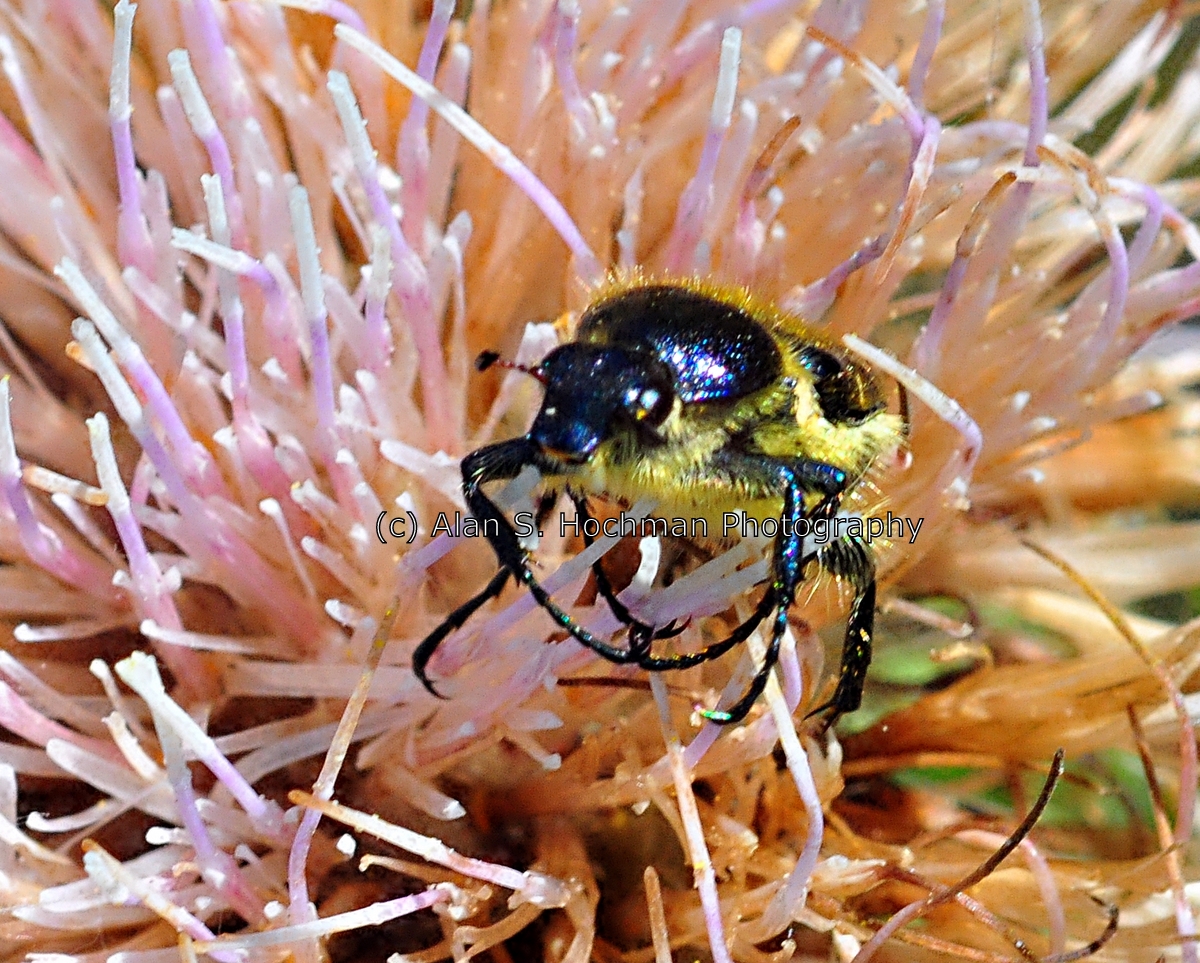
This photograph of a wasp was taken at Enchanted Forest Park in North Miami, Florida. The subject was shot with a Nikon D-90 coupled to a Nikkor 60mm lens attached to a Tamron 2x teleconverter on a sunny day.
Does anyone know what kind of wasp this is? If so, please leave a comment and inform me.
Wasp Trivia:
The term wasp is typically defined as any insect of the order Hymenoptera and suborder Apocrita that is neither a bee nor ant. Almost every pest insect species has at least one wasp species that preys upon it or parasitizes it, making wasps critically important in natural control of their numbers, or natural biocontrol. Parasitic wasps are increasingly used in agricultural pest control as they prey mostly on pest insects and have little impact on crops.
The following characteristics are present in most wasps:
- Two pairs of wings (except wingless or brachypterous forms in all female Mutillidae, Bradynobaenidae, many male Agaonidae, many female Ichneumonidae, Braconidae, Tiphiidae, Scelionidae, Rhopalosomatidae, Eupelmidae, and various other families).
- An ovipositor, or stinger (which is only present in females because it derives from the ovipositor, a female sex organ).
- Few or no thickened hairs (in contrast to bees); except Mutillidae, Bradynobaenidae, Scoliidae.
- Nearly all wasps are terrestrial; only a few specialized parasitic groups are aquatic.
- Predators or parasitoids, mostly on other terrestrial insects; most species of Pompilidae (e.g. tarantula hawks), specialize in using spiders as prey, and various parasitic wasps use spiders or other arachnids as reproductive hosts.
Cool wildlife photo
Great photos “in the wild”!
hi, nice to meet you. Today i have time to visit your blog. Awesome picture you have. Really awesome and so beautiful. Thank you for supporting me by visting my blog and left a comment. Am so happy. your blog also listed in my bookmark list.. =D
Thank you Rabiatul for the compliment! I really do appreciate it.
Are you strictly Florida based? Your pix are excellent.
nice close-up Alan. As shown in picture quality I think you have a good camera!
Thank you! I mostly use a Nikon d90
Now this is really cool!! Sorry no clue what kind of wasp it is without investigating. I actually take my unknown species to a gal who is very good at identifying all sorts of things. She has a group in gather if you want her name and link.
Thank you. Yes, if you get a chance, may I have her name and link.
Did you go to school for this???
Alan, you take great pictures
So pretty and good composure.
I love your pictures. I think they are amazing.
Thank you Eve. I really appreciate your comment.
Alan, way cool photos
Great picture, Alan!
Funnily enough, we were on a hike in a nearby forest yesterday and saw a wasp preying on a spider. Managed to get it on video as well if you are interested – http://360extremes.com/2012/03/05/fight-to-the-death/ – was very much clueless about how wasps go after their prey and the information we got was from a biologist who passed by and saw it at the same time. Interesting to read the information you give as well.
He is awesome! I would not want to irritate this guy.
Some people use the point n shoot method. I do the shoot n run method myself! 🙂